Back to Activities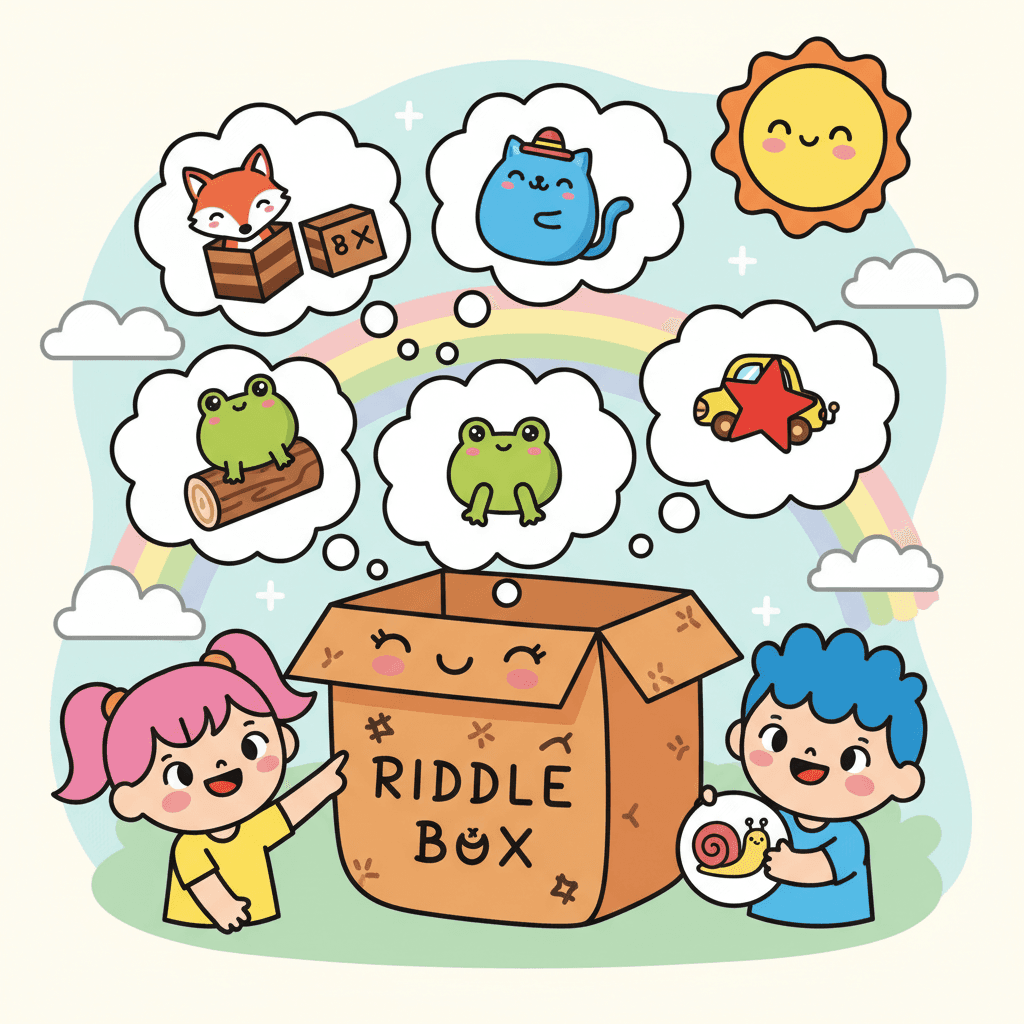
Literacy
Rhyming Riddle Box: Auditory Fun for Pre-K
Children will listen to playful rhyming riddles and find matching objects, sharpening their ability to hear and identify rhyming words. This engaging game builds crucial phonological awareness skills and expands vocabulary, laying a strong foundation for early reading success in a fun, interactive way.
Share:
Topics:
game
Ages 3-5
Log in to track your progress on this activity
Sign in to track progressWhat Your Child Will Learn
- Identify and produce rhyming words.
- Enhance auditory discrimination by distinguishing similar word sounds.
- Expand vocabulary through playful word association.
- Improve listening comprehension and attention skills.
Materials Needed
- A small box or bag (e.g., a shoe box, a gift bag)
- 5-10 pairs of small household objects that rhyme (e.g., a toy "cat" and a "hat", a small "car" and a "star" drawing, a toy "bug" and a small "rug", a "bear" and a toy "chair", a "fox" and a small "box")
- Optional: Index cards or small pieces of paper
Step-by-Step Instructions
This activity takes about 15-20 minutes and is perfect for Pre-K children (3-5 years old). It helps children develop a keen ear for sounds in words, which is vital for learning to read.
What You'll Need
- A small box or bag (e.g., a shoe box, a gift bag)
- 5-10 pairs of small household objects that rhyme (e.g., a toy "cat" and a "hat", a small "car" and a "star" drawing, a toy "bug" and a small "rug", a "bear" and a toy "chair", a "fox" and a small "box")
- Optional: Index cards or small pieces of paper
Learning Objectives
Your child will develop these important skills:
- Identify and produce rhyming words.
- Enhance auditory discrimination by distinguishing similar word sounds.
- Expand vocabulary through playful word association.
- Improve listening comprehension and attention skills.
How to Do This Activity
- Step 1: Gather your rhyming pairs: Before starting, collect 5-10 pairs of small objects that rhyme. For example, a toy cat and a child's hat, a small toy car and a drawn star, a toy bug and a small rug, a toy bear and a miniature chair, a toy fox and a small empty box.
- Step 2: Prepare the riddle box: Place one item from each rhyming pair inside your box or bag. Keep the matching rhyming items hidden from your child for now.
- Step 3: Introduce the game: Sit with your child and say, "Today, we're going to play a rhyming riddle game! I have some mystery items in this box, and I'm going to give you a clue to help you guess what rhymes with them!"
- Step 4: Present the first riddle: Pull one item out of the box (e.g., the toy cat). Hold it up and say, "I have a fuzzy little cat. Can you think of something that rhymes with 'cat'? It's something you wear on your head!"
- Step 5: Encourage guessing and reveal: Give your child time to think and guess. If they struggle, offer more clues or the first sound of the rhyming word. Once they guess "hat," triumphantly pull out the actual hat! Celebrate their correct answer.
- Step 6: Continue with other riddles: Repeat steps 4 and 5 with the remaining items in the box. For example, if you pull out the toy car, you might say, "I see a shiny red car. What rhymes with 'car'? It twinkles high in the sky!" (Star)
- Step 7: Swap roles (optional): If your child is enjoying it, let them take a turn being the riddle-giver, holding an object and trying to think of a rhyming clue for you.
Tips for Parents
- Keep it positive: Praise your child's effort and participation, even if their guesses aren't always correct. Say, "Great try! That was a good thinking word!"
- Follow their lead: If your child loses interest, take a break or simplify the game. Learning should always feel like play.
- Make it fun: Use silly voices, make sound effects, and exaggerate your excitement when they guess a rhyme correctly.
- Real-world connections: Point out rhyming words in books, songs, or everyday conversations throughout the day to reinforce the concept.
Ways to Extend Learning
- Make it easier: Start with only 2-3 rhyming pairs. Instead of riddles, simply say, "This is a cat. Can you think of a word that rhymes with cat?" and offer the rhyming object if they struggle.
- Make it harder: Instead of showing an object, just say the word (e.g., "I'm thinking of a word that rhymes with 'frog'. It says 'ribbit'!") and have them guess the rhyming word and then find the object from a small selection.
- Take it further: Introduce rhyming picture cards or create simple rhyming couplets together (e.g., "The dog sat on a log.") and then draw pictures to illustrate them.
.png&w=3840&q=75)