Back to Activities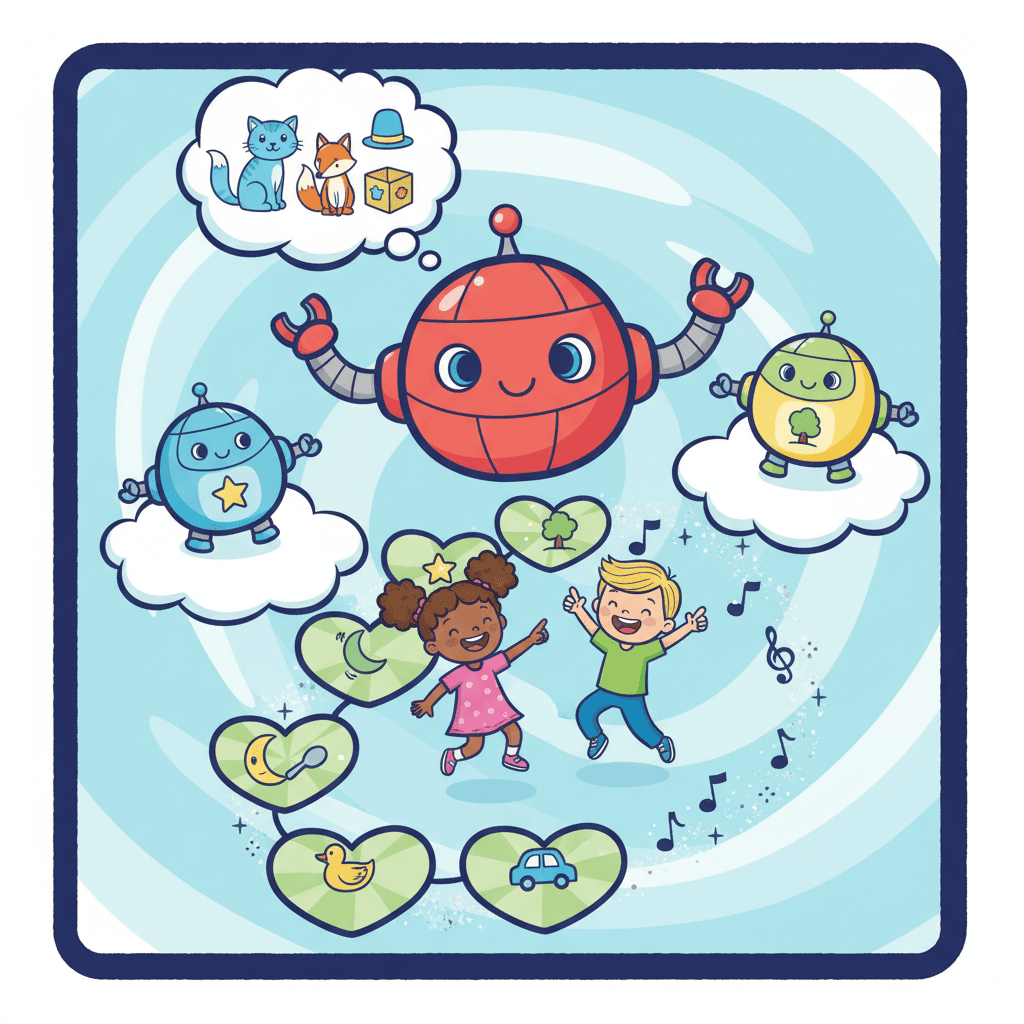
Literacy
Rhyme Time Robot Rescue: A Fun Rhyming Game!
Children will embark on an exciting mission to "rescue" lost robots by identifying and matching rhyming words. This playful game builds crucial phonological awareness, specifically rhyming skills, which are fundamental for early literacy and reading development, setting them up for school success.
Share:
Topics:
game
Ages 4-6
Log in to track your progress on this activity
Sign in to track progressWhat Your Child Will Learn
- Identify rhyming word pairs auditorily.
- Produce words that rhyme with a given word.
- Develop phonological awareness, a key pre-reading skill.
- Expand vocabulary through playful word exploration.
- Enhance listening and attention skills.
Materials Needed
- 8-10 small toy robots (or any small toys like blocks or plastic figures)
- Paper or cardstock
- Markers or crayons
- Scissors (for adult use)
- Optional: A small basket or box for the "Robot Rescue Station"
Step-by-Step Instructions
This activity takes about 15-20 minutes and is perfect for Kindergarteners (4-6 years old). It helps children build foundational rhyming skills, a crucial step towards reading success.
What You'll Need
- 8-10 small toy robots (or any small toys like blocks or plastic figures)
- Paper or cardstock
- Markers or crayons
- Scissors (for adult use)
- Optional: A small basket or box to serve as the "Robot Rescue Station"
Learning Objectives
Your child will develop these important skills:
- Identify rhyming word pairs auditorily.
- Produce words that rhyme with a given word.
- Develop phonological awareness, a key pre-reading skill.
- Expand vocabulary through playful word exploration.
- Enhance listening and attention skills.
How to Do This Activity
- Prepare the Rhyme Clues: On separate small pieces of paper or cardstock, write or draw simple pictures of words that rhyme. You'll need one "clue" word for each robot you have. For example, if you have 8 robots, create 8 clue cards. Pairs could be: "cat" / "hat", "dog" / "log", "bear" / "chair", "bug" / "rug", "fox" / "box", "star" / "car", "frog" / "hog", "mouse" / "house".
- Hide the Robots: Place the small toy robots in various easy-to-find spots around a designated play area (e.g., under a cushion, on a shelf, behind a door). Make sure they are visible enough for your child to spot.
- Introduce the Mission: Gather your child and say, "Oh no! Our friendly robots are lost and need rescuing! They can only be found if we use our super rhyming ears. Can you help me find them?"
- Give the First Rhyme Clue: Hold up one of your clue cards (e.g., the 'cat' card) and say clearly, "Our first robot is hiding somewhere that rhymes with... 'cat'! Can you find the robot that rhymes with 'cat'?"
- The Rescue! Encourage your child to search for a robot. Once they find one, ask them, "What did you find? Does it rhyme with 'cat'?" If they find the 'hat' robot, they can say "Hat! Cat and Hat rhyme!"
- Bring to the Rescue Station: Have your child bring the "rescued" robot to the designated "Robot Rescue Station" (your basket/box). Praise their rhyming skills!
- Continue the Mission: Repeat with the remaining clue cards, giving a new rhyming word clue each time. Celebrate each successful robot rescue!
Tips for Parents
- Keep it positive: Celebrate every attempt, even if they don't get it right away. Say, "Great listening! Let's try that word again together." Praise effort and participation over perfect answers.
- Follow their lead: If your child loses interest, take a break or switch to a different activity. You can always come back to the Robot Rescue another time. Keep the game short and sweet.
- Make it fun: Use an excited "robot voice" when giving clues, or make funny robot movements. Add sound effects like "Beep boop! Rhyme alert!" to make it more engaging.
- Real-world connections: Point out rhyming words in everyday life, like in books, songs, or even when you're talking. "Look, the dog is on the log!" This helps them see rhymes everywhere.
Ways to Extend Learning
- Make it easier: For younger children or those just starting with rhyming, offer only two choices of robots, one that rhymes and one that doesn't. You can also physically point to two potential robots and ask, "Which one rhymes with 'cat'?"
- Make it harder: Instead of providing a clue word, give a category and ask your child to think of a rhyming word. For example, "Find a robot that rhymes with a color, like 'blue'!" (Clue: "shoe" or "glue"). Or ask them to generate two rhyming words for each robot they find.
- Take it further: After rescuing all the robots, create a "Rhyme Time Robot Song" together, using the rhyming pairs you found. Or, draw pictures of the rhyming pairs and make a simple rhyming book.
.png&w=3840&q=75)