Back to Activities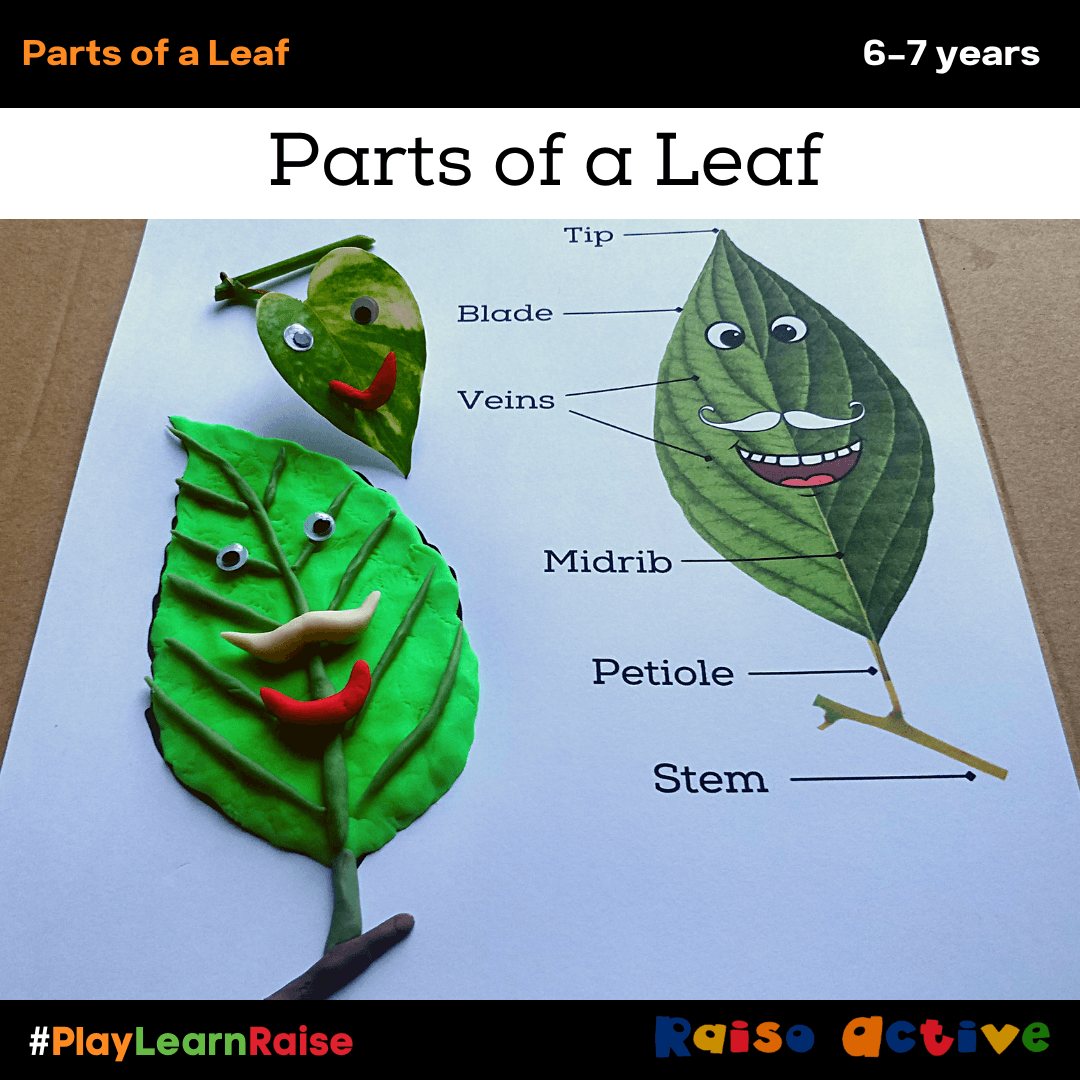
Science
Parts of a Leaf: Playdough Craft & Early Science Activity for Kids
Engage your child in a hands-on science lesson by creating a leaf with playdough and identifying its key parts. This activity combines creative play with early botany, helping children understand basic plant anatomy.
Share:
Topics:
craft
Ages 6-7
Printable PDF
Video Tutorial
Log in to track your progress on this activity
Sign in to track progressWhat Your Child Will Learn
- Identify and name the main parts of a leaf (tip, blade, veins, midrib, petiole, stem).
- Develop fine motor skills and hand-eye coordination through playdough manipulation.
- Enhance observation skills by comparing real leaves to diagrams and their own creations.
- Foster creativity and imaginative play.
- Introduce basic concepts of plant anatomy and environmental science.
Materials Needed
- Green playdough
- Brown playdough
- Real leaf (with clear parts)
- Printable leaf diagram/worksheet (optional)
- Googly eyes (optional)
- Small pieces of red/white playdough (optional)
- Craft stick or dull knife (optional)
Video Tutorial
Step-by-Step Instructions
What You'll Need
• Green playdough • Brown playdough (for the stem/petiole) • A real leaf with clearly visible parts (e.g., a large, intact leaf with a stem) • Printable leaf diagram/worksheet (from the provided PDF, optional) • Googly eyes and small pieces of red/white playdough for features (optional, for fun) • Craft stick or dull knife (optional, for shaping playdough)
Getting Started
Gather all your materials in a clear workspace. If using the printable, have it ready for reference. Find a real leaf with a noticeable stem, midrib, and blade for observation.
How to Do This Activity
• Observe a Real Leaf: Start by closely examining the real leaf with your child. Point out and name the different parts: the sharp 'Tip', the broad 'Blade' (the main flat part), the 'Veins' (lines running through the blade), the thick central 'Midrib', the 'Petiole' (the small stalk connecting the blade to the stem), and the 'Stem' (the main support structure). • Reference the Diagram: Use the provided leaf diagram (from the printable or the image) to reinforce the names and locations of each part. Discuss briefly what each part might do for the leaf or plant. • Create with Playdough: Encourage your child to use the green playdough to create the main 'blade' of their leaf. Guide them to shape it similar to the real leaf or the diagram. • Add Leaf Parts: Using the playdough, help them add the 'midrib' and 'veins' to their playdough leaf. Use brown playdough to form the 'petiole' and 'stem' and attach it to the leaf blade. • Make it Fun (Optional): If desired, add googly eyes and small playdough mouths to give the leaf a playful character, as shown in the example image. • Compare and Discuss: Once the playdough leaf is complete, compare it to the real leaf and the diagram. Discuss how well they replicated the parts and what they learned about each section. • Worksheet Activity (Optional): If you printed the worksheet, have your child trace the outline of the leaf or color it in, further reinforcing the shapes and structures.
Tips for Parents
• Use simple, clear language when explaining the parts of the leaf. • Encourage your child to touch and feel the real leaf to understand its texture and structure. • Ask open-ended questions like, “What do you think the veins do?” or “How is your playdough leaf similar to the real one?” • Reinforce learning by pointing out leaf parts on other plants you encounter during walks.
Ways to Extend
Collect different types of leaves during an outdoor walk and compare their shapes, sizes, and how their parts might vary. You can also press and dry leaves to create a 'leaf collection' or a nature journal. For older children, research the specific function of each leaf part in photosynthesis.