Back to Activities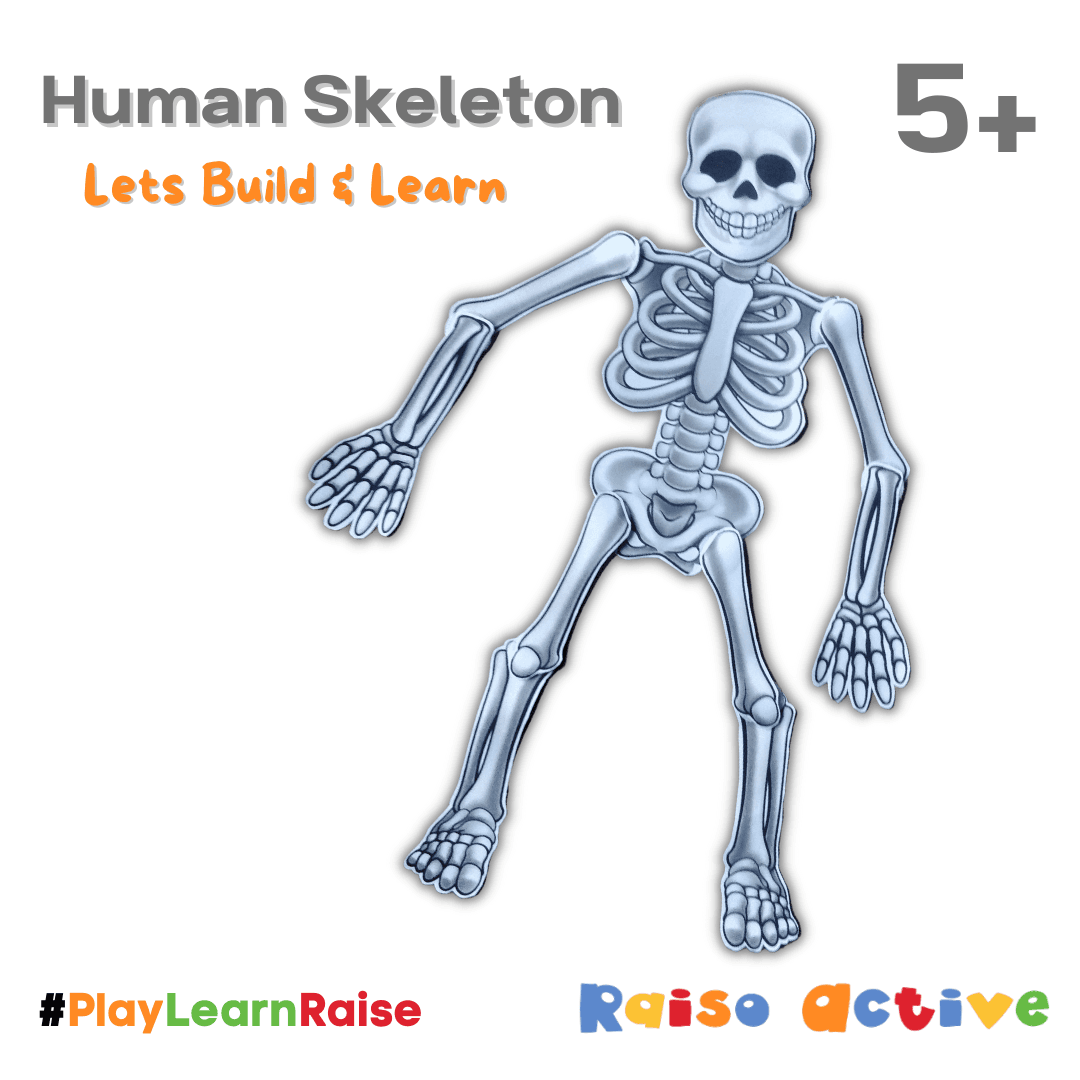
Science
Human Skeleton Build & Learn Activity for Kids | Anatomy Craft & Matching
Engage children in a hands-on activity to build an articulated human skeleton model. This printable activity also includes a matching worksheet to help kids learn and identify major bones and joints, fostering early anatomy knowledge and fine motor skills.
Share:
Topics:
craft
Ages 5-8
Printable PDF
Video Tutorial
Log in to track your progress on this activity
Sign in to track progressWhat Your Child Will Learn
- Identify major bones and joints of the human skeleton.
- Develop fine motor skills through cutting and assembling.
- Enhance problem-solving abilities and spatial reasoning.
- Expand vocabulary related to human anatomy.
- Foster an early understanding of the human body and science.
Materials Needed
- Printer
- Paper (cardstock recommended)
- Scissors
- Brads (paper fasteners) or string/yarn
- Crayons or markers (optional)
Video Tutorial
Step-by-Step Instructions
What You'll Need
• Printer • Paper (cardstock recommended for durability) • Scissors • Brads (paper fasteners) or string/yarn for joining, or glue/tape if making a fixed model • Crayons or markers (optional, for coloring before cutting)
Getting Started
Begin by printing all three pages of the 'Human Skeleton' activity. Gather your materials in a clear workspace. You might want to discuss with your child what they already know about bones or the human body to spark their interest.
How to Do This Activity
• Matching Worksheet: Start with the first page, 'Skeleton'. Ask your child to identify the different parts of the skeleton. Then, help them draw lines to match each bone or joint to its correct name in the provided boxes. This helps with early identification and vocabulary. • Cut Out Bones: Carefully cut out all the individual bone pieces from 'Skeleton – Part 1' and 'Skeleton – Part 2'. Encourage your child to do as much of the cutting as they can safely, as this is great for developing fine motor skills. • Assemble the Skeleton: Use the black circles on the bone pieces as guides for joining. If using brads, poke a small hole through each circle and connect the corresponding pieces to create a movable skeleton. If using string, you can loop it through the holes to tie pieces together. Alternatively, for a simpler, fixed model, pieces can be glued or taped together on a separate sheet of paper. • Learn and Articulate: As you assemble, name each bone and discuss its function (e.g., "This is the skull, it protects your brain!"). Once complete, encourage your child to move the skeleton's limbs and talk about how our bodies move.
Tips for Parents
• Supervise closely during the cutting phase to ensure safety. • Encourage your child to use the correct names for the bones and joints as they assemble. • Make it a fun, interactive learning session rather than a test. • If brads are too complex, consider laminating the pieces and using hook-and-loop dots for repeated assembly.
Ways to Extend
For older children, research more specific bone names (e.g., femur, tibia, humerus). You could also challenge them to draw muscles onto their completed skeleton. Turn it into a Halloween decoration by adding a spooky face! Discuss how bones protect our organs and help us move, linking it to healthy habits like eating nutritious food and exercising.