Back to Activities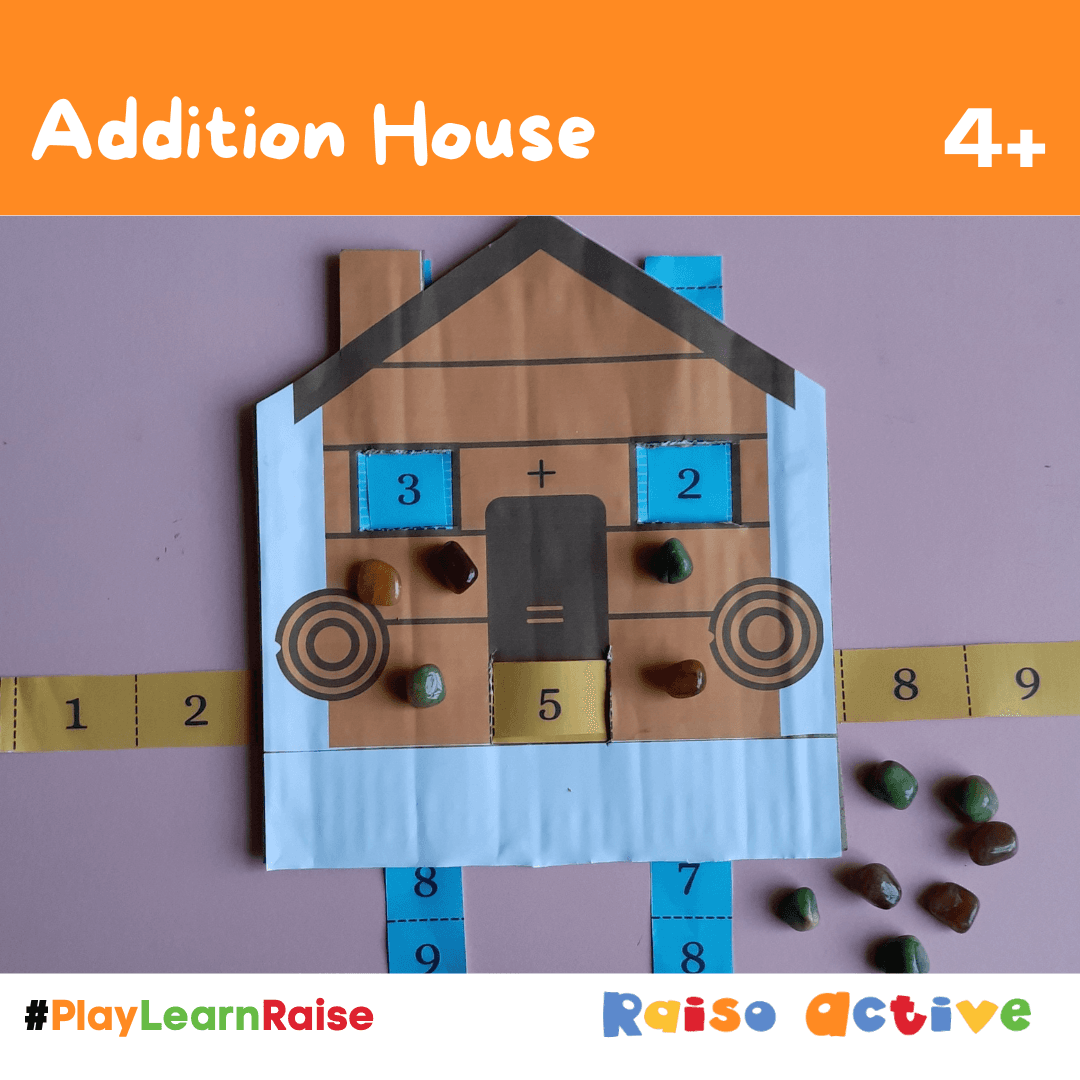
Math
DIY Addition House Math Game for Preschool & Kindergarten
Children will create an interactive 'Addition House' using a printable template and then use it as a hands-on tool to practice basic addition facts. This engaging craft and game makes learning fundamental math concepts fun and accessible for young learners.
Share:
Topics:
game
Ages 4-7
Printable PDF
Video Tutorial
Log in to track your progress on this activity
Sign in to track progressWhat Your Child Will Learn
- Develop basic addition skills up to 18.
- Strengthen number recognition and counting abilities.
- Improve fine motor skills through cutting and manipulating number strips.
- Enhance problem-solving abilities in a math context.
- Foster a positive and engaging attitude towards learning math.
Materials Needed
- Printable Addition House template (PDF)
- Cardboard
- Scissors
- Glue stick or liquid glue
- Cello tape (optional)
- Small counters (e.g., pebbles, buttons, beans - optional)
- Pencil or dry-erase marker (optional)
Video Tutorial
Step-by-Step Instructions
What You'll Need
• Printable Addition House template (PDF pages 1 & 2) • Cardboard (e.g., from a cereal box) • Scissors • Glue stick or liquid glue • Cello tape (optional, for covering numbers or securing strips) • Small counters (e.g., pebbles, buttons, beans, pom-poms – optional) • Pencil or dry-erase marker (if using cello tape for re-writable numbers)
Getting Started
• Print out both pages of the Addition House template. • Carefully cut out the house shape from page 1 and all the number strips from page 2. • Glue the house template onto a piece of cardboard to make it sturdy. Let it dry completely. • Once dry, carefully cut out the blue window areas, the brown door area, and the bottom yellow strip of the door. These will be slots for your number strips. You can use a craft knife for cleaner cuts, but parental supervision is essential. • For durability and reusability, you can laminate the house or cover the window/door areas with cello tape if you plan to write numbers directly on them with a dry-erase marker.
How to Do This Activity
• Introduce the 'Addition House' to your child. Explain that the two windows are where the numbers we add together go, the '+' sign means 'add', and the door is where our total or 'sum' will appear. • Take two number strips from your cutouts and slide one into each window slot. For example, place '3' in one window and '2' in the other. • Ask your child to add the two numbers together. They can use the small counters to help them visualize the addition (e.g., place 3 pebbles under the '3' window and 2 pebbles under the '2' window, then count them all together). • Once they've found the sum, help them find the corresponding number strip (e.g., '5') and slide it into the door slot. • Practice with different combinations of numbers, encouraging your child to vocalize the addition problem (e.g., "3 plus 2 equals 5").
Tips for Parents
• Start with smaller numbers (0-5) and gradually increase the difficulty as your child gains confidence. • Encourage your child to use their fingers or the provided counters to help them count. • Make it a playful learning experience. You can pretend the numbers are 'guests' coming into the house! • If your child struggles, break down the problem. For 3 + 2, ask them to count out 3 items, then 2 more, and then count all items together.
Ways to Extend
• Subtraction House: Change the '+' sign to a '-' sign and the '=' sign to represent subtraction. Children can then practice subtraction facts. • Larger Numbers: Use the higher number strips (up to 18) for more challenging addition problems. • Missing Addend: Place a sum in the door and one number in a window. Ask your child to find the missing number for the other window. • Story Problems: Create simple word problems that your child can solve using the Addition House (e.g., "There were 4 birds on the roof, and 3 more landed. How many birds are there now?").
.png&w=3840&q=75)
.png&w=3840&q=75)