Back to Activities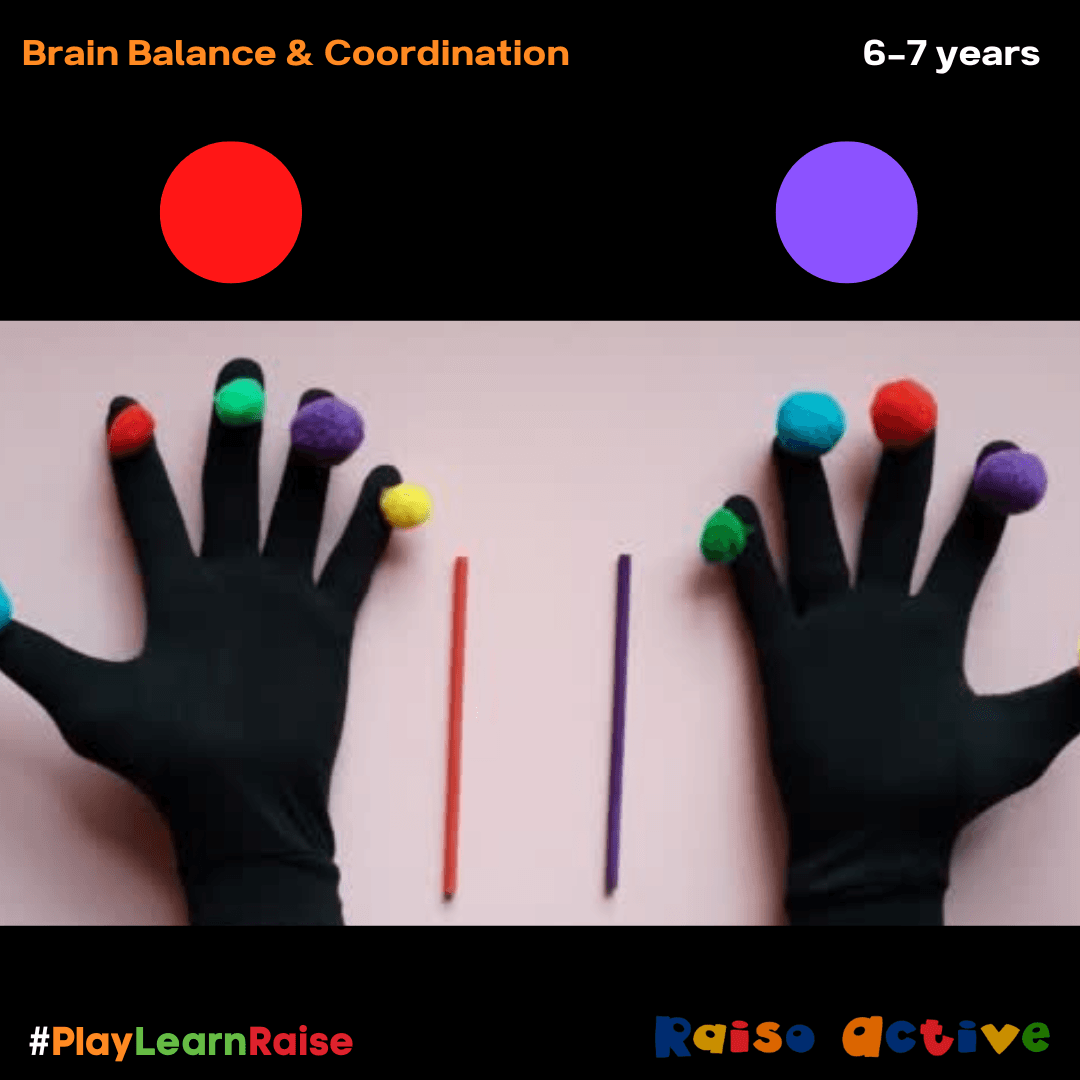
Physical Development
Brain Balance & Coordination Finger Game for Kids (Ages 6-7)
Engage children in a fun brain-boosting activity that enhances balance and coordination. Kids will use their fingers to match colors and patterns, developing fine motor skills and concentration.
Share:
Topics:
game
Ages 6-7
Video Tutorial
Log in to track your progress on this activity
Sign in to track progressWhat Your Child Will Learn
- Develop fine motor skills and finger dexterity
- Enhance hand-eye coordination and balance
- Improve concentration and focus
- Practice color recognition and matching
- Boost cognitive processing and pattern recognition
Materials Needed
- Pair of black gloves
- Assorted colored pom-poms
- Strong glue (e.g., fabric glue)
- Colored sticks or cards (red, purple, and other colors)
- Flat surface
Video Tutorial
Step-by-Step Instructions
What You'll Need
• Pair of black gloves • Assorted colored pom-poms (e.g., red, green, purple, yellow, blue) • Strong glue (e.g., fabric glue or hot glue gun with adult supervision) • Colored sticks or cards (at least two different colors, matching pom-pom colors) • Flat, clear surface
Getting Started
Before starting the activity, glue one pom-pom to the tip of each finger on both gloves. Ensure you use a variety of colors, and that some colors are repeated across different fingers or hands, similar to the image provided. Allow the glue to dry completely. Place the colored sticks or cards on a flat surface in front of the child.
How to Do This Activity
• Ask your child to put on the pom-pom gloves. • Start with a simple instruction, such as calling out a single color. Ask your child to touch one of the colored sticks with the finger that has the matching colored pom-pom. • Gradually increase the complexity. For example, place a red stick and a purple stick on the table. Ask your child to touch the red stick with their red pom-pom finger, then the purple stick with their purple pom-pom finger. • Introduce alternating movements, asking them to switch hands or fingers rapidly. • Challenge their memory and sequencing by calling out a series of colors (e.g., "Red, Green, Purple!") for them to follow in order, tapping the corresponding colored sticks or just moving the correct finger. • For an advanced challenge, create a simple pattern with the colored sticks and ask your child to replicate the pattern by tapping the sticks with the correct pom-pom fingers, using both hands if applicable.
Tips for Parents
• Start with simple, one-step commands and gradually increase the difficulty to avoid frustration. • Encourage your child to focus and move slowly at first, prioritizing accuracy over speed. • Use clear, concise language when giving instructions. • Celebrate their efforts and progress, no matter how small, to build their confidence. • If a child struggles, break down the task into smaller, more manageable steps.
Ways to Extend
Introduce more colored sticks or cards to increase the number of options. Use a timer to challenge your child to complete a sequence within a certain time frame, promoting quicker cognitive processing. Create more complex patterns or sequences for them to follow. Integrate verbal cues with visual cues (e.g., point to a color while saying its name). Ask them to use specific fingers (e.g., "touch the blue stick with your right hand's index finger").